Roles & Permissions
How Vega roles and permissions work: grant event, billing, and staff access, build custom roles, and fix permission errors for your team.
Watch this walkthrough
All videos
Vega uses a granular permission system that lets you control exactly what each team member can do. Instead of rigid preset roles, you create custom roles with the specific permissions your team needs.
How It Works
- Permissions are individual capabilities (e.g., “can create events” or “can manage staff”)
- Roles are collections of permissions that you name and assign to team members
- Each team member is assigned one role within your organization
Available Permissions
Vega’s permissions are action-based — each one grants the ability to manage part of the platform. General view access (seeing events, groups, staff, spaces, and organization details) is automatic for every staff member, so you only assign the permissions that let someone make changes.
Events
| Permission | What It Allows |
|---|---|
| Manage Events | Create, edit, and approve all events for the organization |
| Request Events | Create events for the organization; view and edit only the events you create |
Groups
| Permission | What It Allows |
|---|---|
| Manage Groups | View and edit all groups in the organization, and create new groups |
Team
| Permission | What It Allows |
|---|---|
| Manage Staff | View all staff members and edit their roles and permissions |
Spaces & Venues
| Permission | What It Allows |
|---|---|
| Manage Spaces | Create, edit, and view all venue spaces for the organization |
Organization
| Permission | What It Allows |
|---|---|
| Manage Organization | Edit the organization profile — description, logo, and settings |
Operations
| Permission | What It Allows |
|---|---|
| Scan Tickets | Scan admission tickets at event doors |
| Executive Permissions | Full admin access across the entire organization, including billing and subscriptions |
⚠️ Warning
Creating a Custom Role
- Go to Settings > Users
- Click on the Roles tab
- Click Add Role
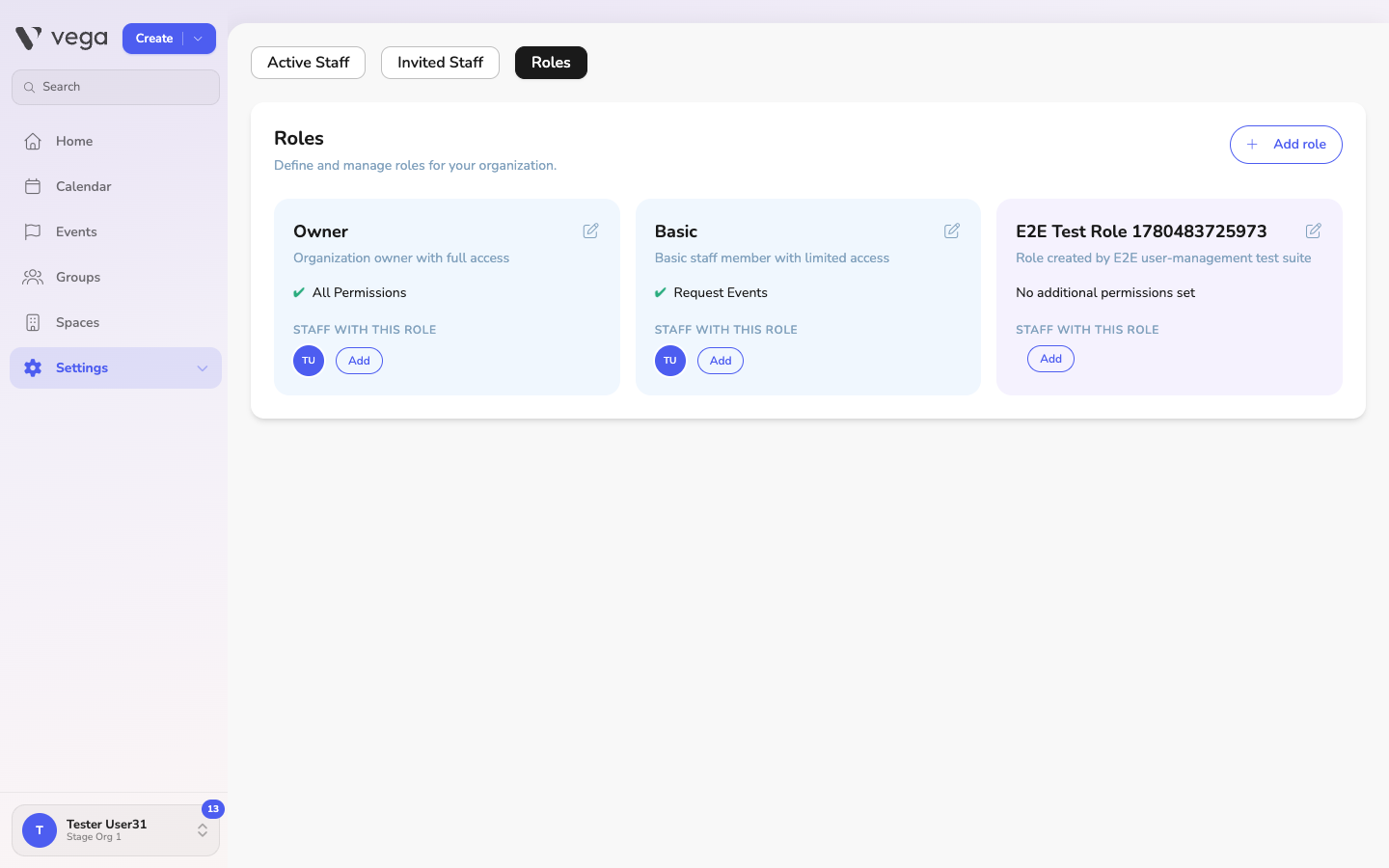
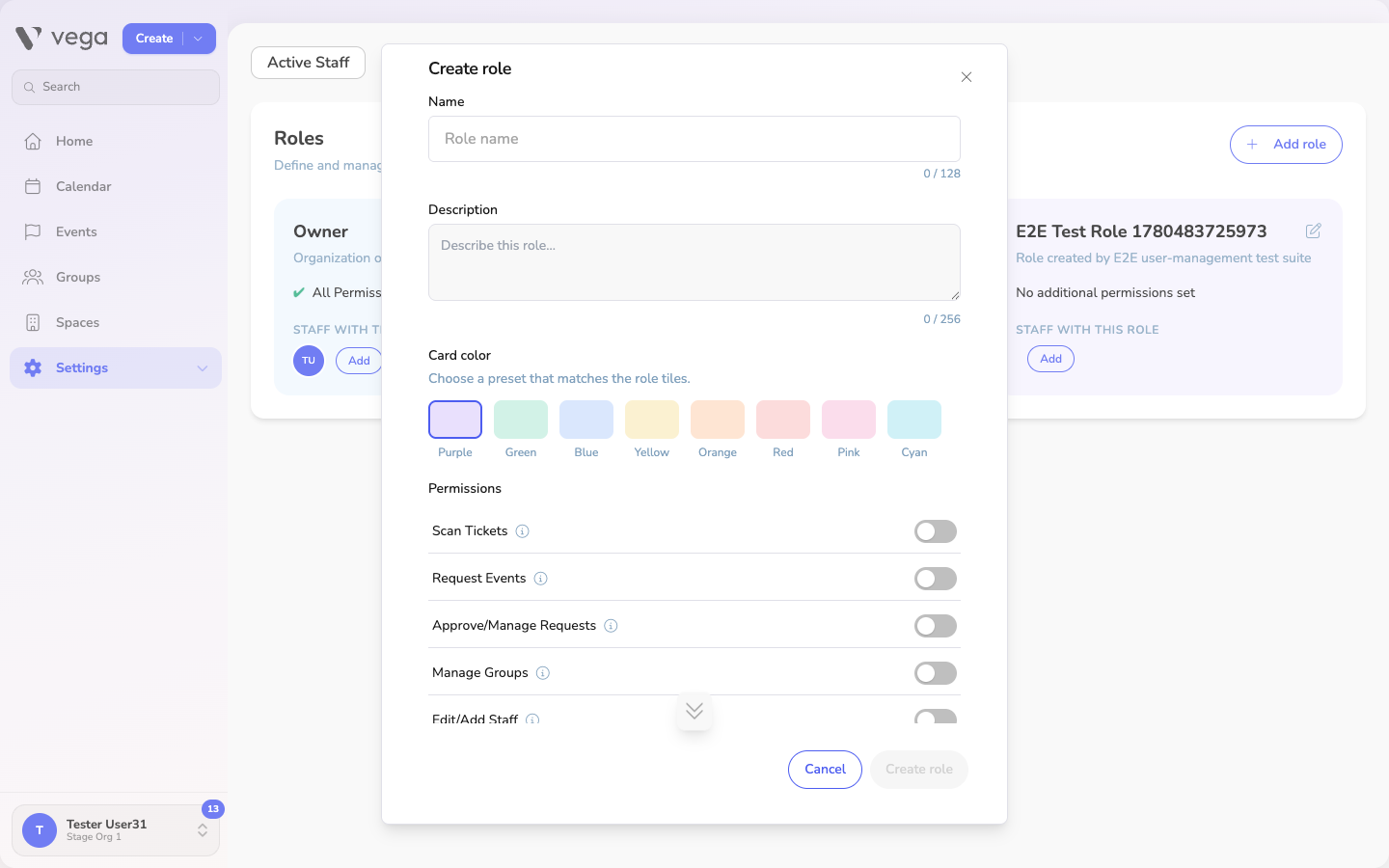
- Give the role a name (e.g., “Event Coordinator”), description, and color
- Select the permissions this role should have
- Save the role
Example Roles
Here are some common role configurations:
Event Coordinator
- Manage Events, Manage Spaces
Front Desk / Door Staff
- Scan Tickets
Organization Admin
- Executive Permissions (full access)
Marketing / Content
- Request Events, Manage Groups
Assigning Roles
When you invite a team member or update an existing member, select the role you want to assign them. Each member gets exactly one role.
Related
- User Management — Invite and manage team members
- Organization Onboarding — Initial setup including role creation